Nepal Seizures Reveal Hill-to-India Cannabis Pipeline as Indian Agencies Step Up Crop Destruction
A series of Nepal police busts has exposed a marijuana network running from Nepal's hill districts to Indian markets, as Indian authorities separately widen a crackdown on illicit cannabis cultivation
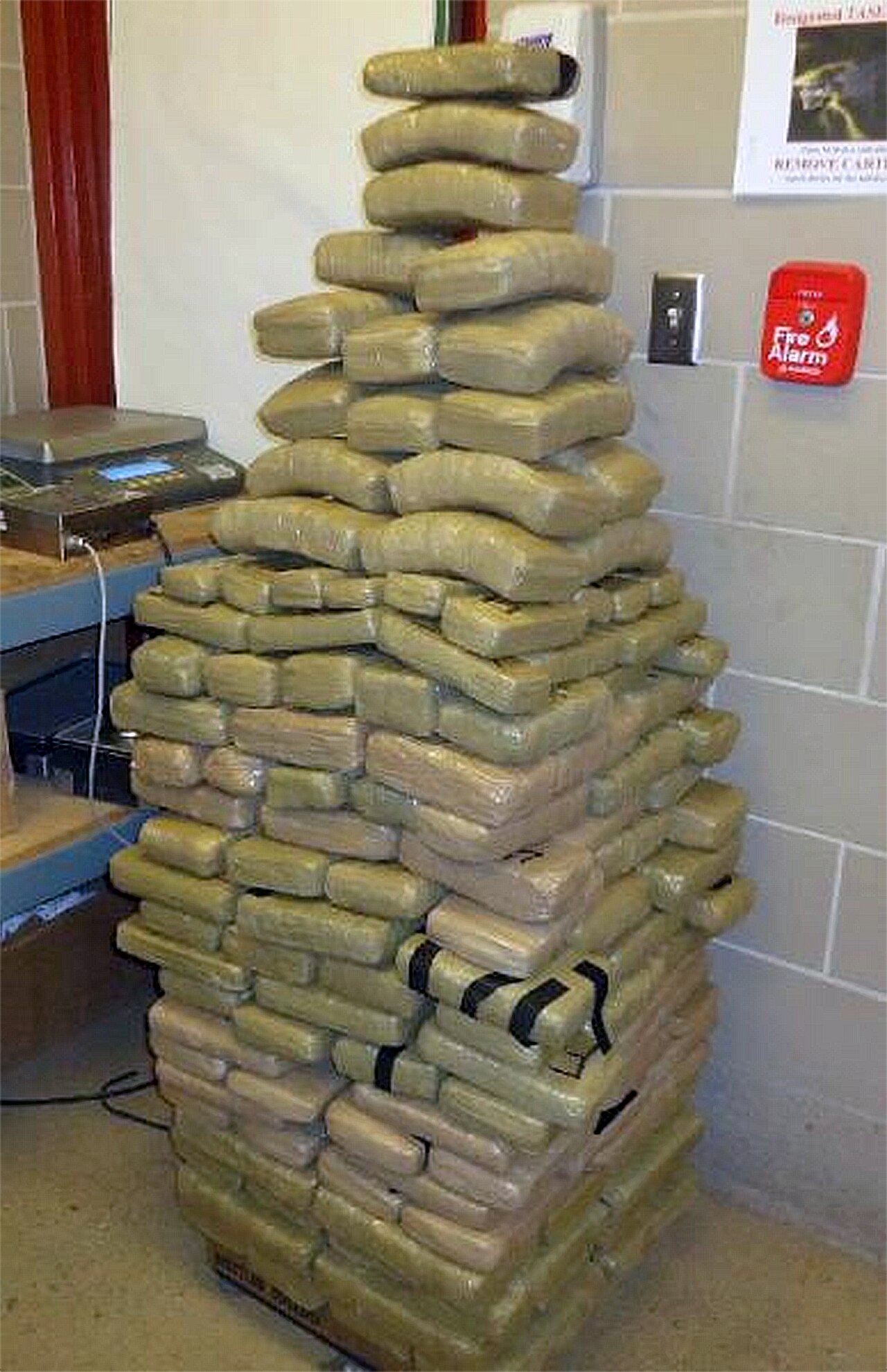 FILE — seized cannabis · U.S. CBP / public domain
Nepal police have uncovered what investigators describe as an organized marijuana trafficking network stretching from cultivation in hill districts through storage points in the Tarai lowlands and into Indian markets, according to myRepublica.
The Udayapur Seizure
The network came into sharper focus after police intercepted a truck carrying 7,826.81 kg of marijuana packed in 246 plastic bags at Mainamaini in Belka Municipality, Udayapur district, on November 1, myRepublica reported, citing an Armed Police Force operation based on a tip-off. Investigators told the outlet they believe the consignment originated in Bhojpur district and was being routed through Udayapur toward India.
Related Busts and Arrest Warrants
myRepublica also reported a separate October 3 seizure of 1,454.87 kg of marijuana in Sunsari district, where police arrested Ram Bahadur Yadav, who told investigators the drugs were destined for India. That investigation led to arrest warrants for 10 additional suspects — including Akhtar Miya, Dilbar alias Dilmohammad Miya, and Ekraj alias Mohammad Majib Mansuri — none of whom had been apprehended as of the report. A third case on November 1 saw around 900 kg recovered from a house in Inaruwa, with Sunsari police telling myRepublica that one of three men arrested, Kundan Yadav, maintained contacts in India to arrange cross-border transport.
Cultivation, Pricing and Corruption Allegations
According to myRepublica, cultivation is concentrated in specific wards of Dhankuta, Bhojpur and Udayapur, with farmers reportedly paid Rs 15 to Rs 25 per plant by trafficking groups. The outlet quoted a teenage girl from Chhintang saying her family earns about Rs 1 million a year from the crop and had already paid Rs 100,000 this year to police, officials, political figures and traffickers. A local resident alleged more than Rs 250 million had been collected from farmers in Dhankuta and Bhojpur this year, though Dhankuta Police Chief SP Narayan Ranjitkar denied any police involvement, telling myRepublica his force had carried out multiple enforcement operations. myRepublica also reported traders buy marijuana from farmers for Rs 5,000–7,000 per kg and resell it in India for up to Rs 9,000.
Seasonal Enforcement Data
Koshi Province Police Office data cited by myRepublica show 31,820.734 kg of marijuana seized across eight districts between mid-July and mid-November of the current fiscal year, with 96 people arrested. Udayapur recorded the largest volume at 12,348.468 kg, followed by Sunsari (8,623.305 kg), Morang (4,120 kg) and Dhankuta (3,105.885 kg). Sunsari logged the most arrests, at 44. Sunsari Police spokesperson DSP Chandra Khadka told myRepublica that major operators rely on local people to move the drug, making low-level carriers more likely to face arrest than organizers.
India's Parallel Crackdown
Separately, the Narcotics Control Bureau has been leading joint operations against illegal cannabis and opium cultivation in Tripura, Himachal Pradesh, Arunachal Pradesh, Rajasthan and Jharkhand, The Hindu reported. The effort is tied to the Union Home Ministry's 'Vision Document on Narcotics Control (2026-2029),' which sets a target of eliminating illicit cannabis and poppy cultivation in identified areas by December 2027. Between October 26 and November 3, a joint operation involving the NCB, CRPF, Sashastra Seema Bal and Arunachal Pradesh authorities destroyed more than 1.37 lakh kg of cannabis plants across roughly 458 acres in West Kameng district, according to The Hindu. The newspaper also reported smaller clearance operations in Tripura's Sepahijala district and Rajasthan's Udaipur district, plus 592 acres cleared in Himachal Pradesh's Kullu region during September-October.
Other Reported Incidents
Separate from the Nepal network and the NCB operations, other Indian cannabis-related cases have surfaced in recent local news coverage tracked in our database, including a cannabis plantation bust in Odisha, a 973-gram hydroponics seizure at Ahmedabad airport, a ₹1 crore cannabis haul intercepted at Pune's airport, and the arrest of three men — including a techie — for selling ganja and cannabis-infused chocolates in Coimbatore, as reported by The Times of India. These incidents are not discussed in the myRepublica or Hindu reporting and appear to be unrelated, smaller-scale enforcement matters rather than evidence of connection to the Nepal-India trafficking network described above.
What to Watch
It remains unclear, based on the available reporting, whether Nepal's hill-to-Tarai-to-India pipeline and India's NCB-led destruction campaign are connected through the same supply chains, since neither source draws that link explicitly. myRepublica's reporting suggests enforcement in Nepal has pushed traffickers toward motorcycles and more dispersed storage points as larger vehicle interceptions increase, while allegations of payoffs to officials — denied by at least one police chief — remain unverified beyond local accounts cited by the outlet. In India, The Hindu's reporting indicates the government has set a multi-year elimination target, suggesting authorities expect the current pace of crop destruction to continue through 2027, though the outcome of that campaign cannot yet be assessed from the material reviewed.
Original report: myRepublica ↗